








Why Realistic Backdrops Matter for Product Photos
Finding the perfect backdrop is a constant challenge for professional food photographers and e-commerce sellers striving to make every product image stand out. The pressure to create authentic scenes that capture attention and drive engagement highlights the critical role of a realistic backdrop in visual storytelling. A well-chosen backdrop does more than set the stage, it shapes the mood, controls distractions, and ensures every detail gets noticed, helping transform ordinary shots into powerful narratives.
Table of Contents
- Defining Realistic Backdrops In Photography
- Key Roles Backdrops Play In Visual Impact
- Types Of Realistic Backdrops For Product Imaging
- Advantages Over Digital Or Inauthentic Backgrounds
- Common Pitfalls And How To Avoid Them
Key Takeaways
| Point | Details |
|---|---|
| Realistic Backdrops Enhance Narrative | Realistic backdrops create authentic contexts that significantly improve product presentation and viewer engagement. |
| Material Selection is Crucial | Choosing the right backdrop material affects lighting, texture, and overall visual impact in professional photography. |
| Physical Over Digital Backdrops | Physical backdrops provide genuine textures and immediate visual feedback that enhance authenticity, unlike digital alternatives. |
| Avoid Common Pitfalls | Careful consideration of color schemes, maintenance, and composition is essential to prevent distractions in product photography. |
Defining Realistic Backdrops in Photography
Photography backdrops are far more than simple background decorations. They represent carefully constructed visual environments that transform product presentations, creating immersive narratives that capture viewers’ attention. Backdrops contribute profound visual storytelling elements by controlling representation and minimizing unpredictable visual noise.
A realistic backdrop serves multiple critical functions in professional photography. Unlike generic backgrounds, these specialized surfaces are meticulously designed to:
- Create authentic visual context
- Enhance product details
- Simulate natural environments
- Control viewer perception
- Provide consistent image quality
Realistic backdrops go beyond mere aesthetic considerations. They function as strategic visual tools that communicate product characteristics, brand identity, and emotional resonance. Professional photographers use backdrops to isolate subjects and emphasize intricate details, transforming ordinary product shots into compelling visual narratives.
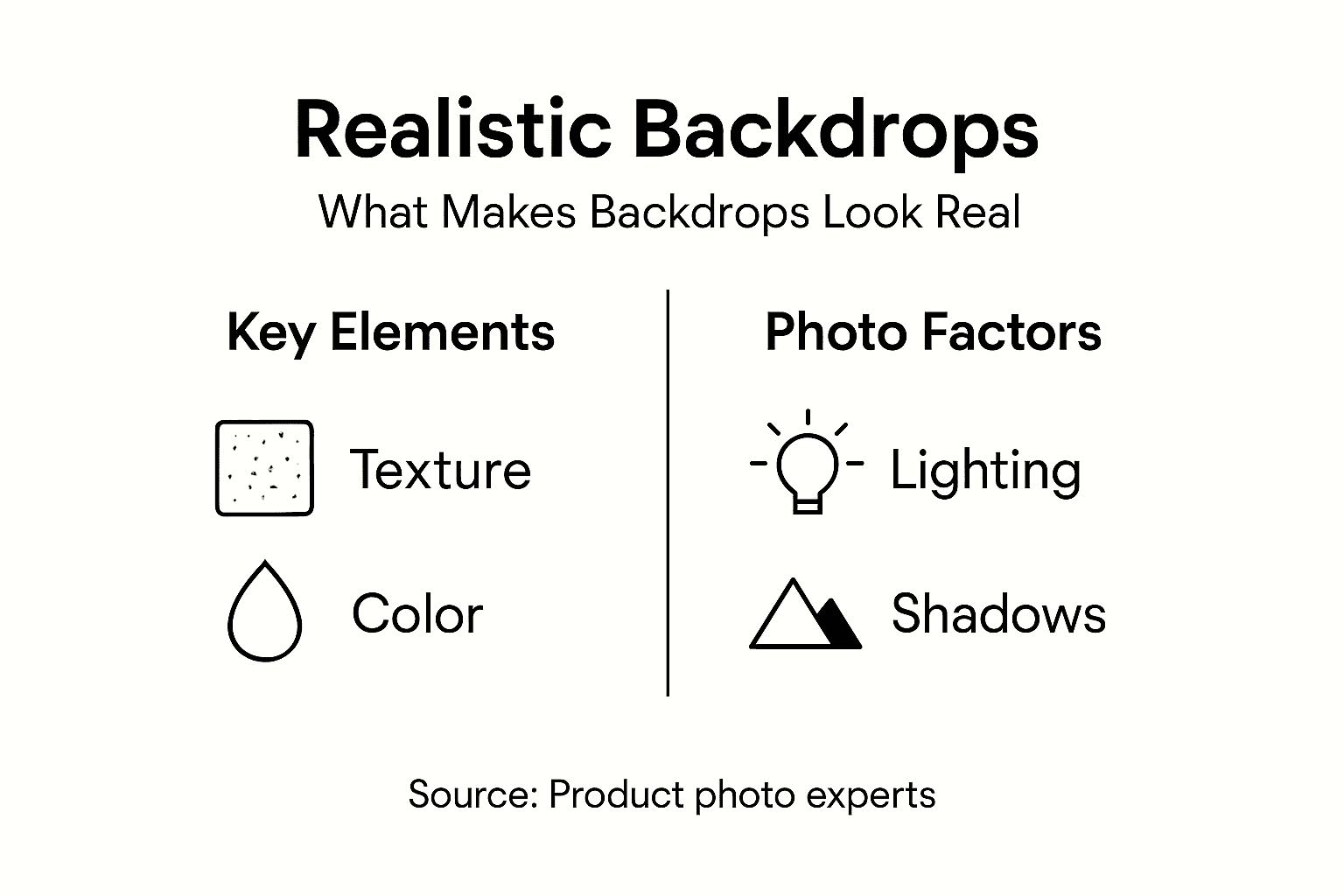
The technical sophistication of realistic backdrops involves understanding texture, color theory, lighting interactions, and visual psychology. Professional creators recognize that an exceptional backdrop does more than occupy space—it actively contributes to storytelling, guiding viewer interpretation and creating immersive visual experiences.
Pro tip: Select backdrops that complement your product’s natural characteristics and create a seamless visual narrative that enhances rather than distracts from your primary subject.
Key Roles Backdrops Play in Visual Impact
Backdrops are strategic visual tools that transcend simple background decoration, playing pivotal roles in transforming product photography. Professional photographers leverage backdrops to craft compelling visual narratives by deliberately manipulating visual elements and viewer perception.
The fundamental roles of backdrops in visual storytelling include:
- Isolating the primary subject
- Establishing emotional context
- Guiding viewer attention
- Creating depth and dimension
- Reinforcing brand identity
- Enhancing product presentation
Compositional strategies emerge when photographers understand how backdrops fundamentally influence visual communication. Background design elements significantly impact image composition, utilizing techniques like leading lines, minimalist approaches, and strategic framing to direct audience engagement.
Technical mastery of backdrops requires understanding complex interactions between color, texture, lighting, and psychological perception. Professional creators recognize that an exceptional backdrop is not merely a passive element but an active participant in visual storytelling, capable of transforming ordinary product shots into immersive, emotionally resonant experiences.
Pro tip: Select backdrops that strategically complement your product’s inherent visual characteristics, ensuring the background enhances rather than competes with your primary subject.
Types of Realistic Backdrops for Product Imaging
Realistic backdrops are sophisticated visual tools that transform product photography by providing contextually rich environments. Photographers can select from diverse backdrop materials that dramatically impact visual storytelling and product presentation.
The primary types of realistic backdrops include:
-
Paper Backdrops
- Lightweight and disposable
- Perfect for clean, minimalist shots
- Available in various colors and textures
-
Vinyl Backdrops
- Durable and water-resistant
- Easy to clean
- Ideal for food and product photography
-
Fabric Backdrops
- Soft, natural textures
- Creates depth and subtle visual interest
- Excellent for fashion and lifestyle products
-
Solid Surface Backdrops
- Wooden panels
- Stone-like surfaces
- Provides authentic, tactile backgrounds
Selecting the right backdrop involves understanding how different materials interact with light, color, and product characteristics. Professional photographers consider factors like surface reflectivity, texture complexity, and thematic alignment when choosing backdrops that enhance rather than overshadow their primary subject.

Technical considerations extend beyond material selection. Lighting angles, color temperature, and backdrop positioning can transform an ordinary product shot into a compelling visual narrative that captures viewer attention and communicates brand identity.
Pro tip: Experiment with multiple backdrop materials and lighting setups to discover the most flattering presentation for your specific product.
Here’s a quick comparison of common backdrop materials and their ideal uses in product photography:
| Backdrop Material | Best For | Unique Advantage | Potential Limitation |
|---|---|---|---|
| Paper | Studio still life | Smooth, clean background | Prone to tearing |
| Vinyl | Food shoots | Moisture resistance | Can reflect light |
| Fabric | Fashion shots | Adds soft depth | Can wrinkle easily |
| Solid Surface | Lifestyle products | Realistic texture | Heavy, less portable |
Advantages Over Digital or Inauthentic Backgrounds
Physical backdrops offer significant advantages that digital backgrounds simply cannot replicate. Professional photographers leverage physical backdrops to create authentic visual experiences that communicate genuine product narratives and emotional resonance.
Key advantages of physical backdrops include:
-
Authentic Texture
- Real surface qualities
- Natural light interactions
- Tactile visual depth
-
Immediate Visual Feedback
- No post-production guesswork
- Instant composition verification
- Precise lighting control
-
Workflow Efficiency
- Reduced editing time
- Consistent visual quality
- Minimized digital manipulation
-
Credibility Enhancement
- Professional appearance
- Genuine product representation
- Increased viewer trust
Physical backdrop setups streamline professional photography workflows by eliminating complex digital compositing challenges. Digital backgrounds often struggle with unnatural shadows, inconsistent lighting, and a manufactured aesthetic that can diminish product authenticity.
Unlike digital alternatives, physical backdrops provide nuanced visual experiences that engage viewers more effectively. The subtle imperfections, natural textures, and genuine light interactions create a sense of realism that digital backgrounds cannot consistently reproduce, making them invaluable for creating compelling product narratives.
Pro tip: Invest in high-quality physical backdrops that offer versatile textures and neutral color palettes to maximize your photography flexibility.
To help professional photographers, here’s a summary of physical vs. digital backdrops:
| Aspect | Physical Backdrop | Digital Backdrop |
|---|---|---|
| Realism | Genuine textures | Simulated appearance |
| Workflow Speed | Faster shooting | More editing required |
| Credibility | Higher authenticity | Possible artificiality |
| Lighting Control | Precise adjustments | Challenging accuracy |
Common Pitfalls and How to Avoid Them
Backdrop selection and usage require strategic consideration to maintain professional image quality. Photographers must carefully navigate potential visual challenges that can undermine product presentation and viewer engagement.
Common backdrop pitfalls include:
-
Background Mismatches
- Clashing color schemes
- Overwhelming texture
- Competing visual elements
-
Technical Issues
- Wrinkled or creased surfaces
- Improper lighting angles
- Unwanted reflections
-
Composition Problems
- Distracting background patterns
- Incorrect subject positioning
- Lack of visual hierarchy
-
Maintenance Challenges
- Dirty or damaged surfaces
- Inconsistent backdrop quality
- Poor storage practices
Strategic backdrop positioning helps minimize distracting background elements that can compromise product visibility. Professional photographers understand that the backdrop should complement, not compete with, the primary subject.
Mitigating these challenges requires intentional technique and careful preparation. Successful product photography demands a nuanced approach that balances technical precision with creative vision, ensuring that backdrops enhance rather than detract from the product’s visual narrative.
Pro tip: Invest in multiple backdrop options and practice consistent steaming or ironing techniques to maintain a smooth, professional surface for your product shots.
Elevate Your Product Photos with Ultra-Realistic Backdrops
The challenge of creating authentic, captivating product images lies in finding backdrops that perfectly complement your subject while enhancing every detail. This article highlights the importance of realistic backdrops for visual storytelling, emphasizing texture, color harmony, and lighting control to deliver professional results without distraction. If your goal is to avoid the pitfalls of mismatched or low-quality backgrounds that compete with your product, switching to durable, stain-resistant vinyl backdrops can ensure every shot communicates quality and consistency.

Discover the difference that premium, spill-proof vinyl backdrops from Instant Backdrops make for product, food, and lifestyle photography. Explore our full range of All product photography backdrops – Instant Backdrops designed to provide textured, real-world environments that elevate your brand image. For nature-inspired looks, our Nature backdrop collection for product & food photography – Instant Backdrops offers authentic surfaces that bring out your product’s best features. Visit Instant Backdrops now to enhance your visual storytelling with backgrounds built to last and impress. Take control of your photography today and create images that truly resonate.
Frequently Asked Questions
What are the main benefits of using realistic backdrops in product photography?
Realistic backdrops provide authentic textures, enhance product details, and create visual context that engages viewers and communicates brand identity effectively.
How do different backdrop materials affect product presentation?
Different materials, such as paper, vinyl, fabric, and solid surfaces, influence the texture, lighting, and overall aesthetic of product shots, impacting how the products are perceived by viewers.
What common mistakes should I avoid when choosing a backdrop for my product photos?
Avoid background mismatches by ensuring color schemes complement the product, addressing technical issues like wrinkles and improper lighting, and preventing composition problems that distract from the primary subject.
Can physical backdrops really make a difference compared to digital ones?
Yes, physical backdrops provide genuine textures and natural light interactions that enhance authenticity, while digital backgrounds often struggle with creating realistic impressions and require more post-production work.