



Compare backdrop materials for professional photography results
TL;DR:
- Choosing the right backdrop material impacts durability, cleaning, portability, and image quality.
- Vinyl and rigid boards are ideal for food photography due to easy cleanup and neutral tones.
- Photographers should select materials based on shoot type, workflow, and setup efficiency for best results.
Most photographers spend hours choosing the perfect backdrop color or theme, only to discover that the material itself is what makes or breaks a shoot. Stains from a food shoot, wrinkles that won’t iron out, or a backdrop too bulky to carry on location are all material problems, not color problems. The truth is, backdrop material directly shapes your workflow, your cleaning routine, and the final quality of your images. This guide breaks down the key materials available, compares them side by side, and gives you clear, practical guidance so you can choose with confidence.
Table of Contents
- Backdrop materials overview: Core options for photographers
- Understanding vinyl, muslin, canvas, and paper backdrops
- Choosing a backdrop for portability and shoot efficiency
- Color, finish, and texture: Making your backdrop work for you
- Our take: What most photographers miss when comparing backdrop materials
- Find your ideal backdrop solution with Instant Backdrops
- Frequently asked questions
Key Takeaways
| Point | Details |
|---|---|
| Backdrop material impacts workflow | Choosing the right material dramatically affects your shooting efficiency, cleaning, and quality. |
| Vinyl suits food and product shoots | Vinyl and rigid boards are easy to clean and optimal for professional food and product photography. |
| Portable options for flexibility | Muslin and vinyl backdrops offer portability, making them ideal for on-location and mobile setups. |
| Neutral tones enhance visuals | Desaturated neutral colors paired with subtle textures deliver freshness and clarity in final images. |
Backdrop materials overview: Core options for photographers
When photographers talk about backdrops, the conversation usually starts with color. But the smarter conversation starts with material. The material you choose determines how long your backdrop lasts, how easy it is to clean, and how well it travels. Choosing the wrong one can slow your workflow or cost you money in replacements.
Here are the five core materials used in professional photography:
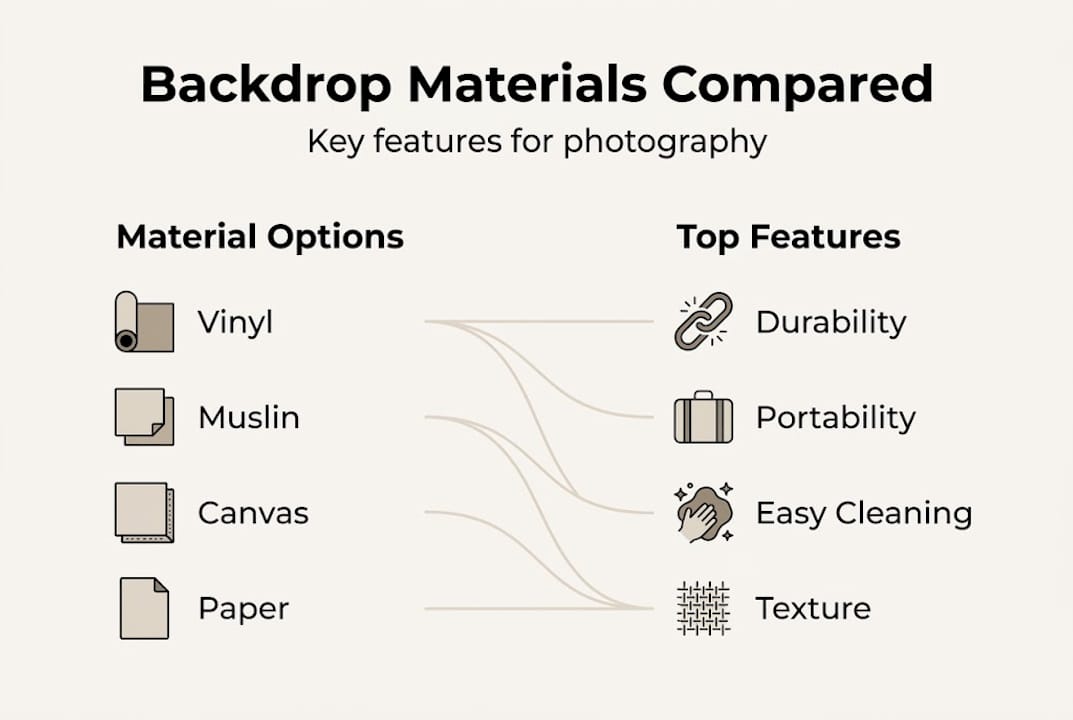
- Vinyl: Smooth, wipeable, and highly durable. Ideal for food, product, and flat lay photography.
- Muslin: Soft fabric that folds easily. Popular for portraits and wedding photography.
- Canvas: Heavy, textured, and paintable. Great for creative studio setups.
- Paper: Affordable and seamless. Best for high-volume portrait sessions.
- Rigid boards: Stiff, flat, and very wipeable. Excellent for close-up product and food photography.
As food photography backdrops experts note, vinyl and rigid boards are preferred for food photography due to their wipeability. That single factor, easy cleanup, can save you significant time between shots.
Understanding professional backdrop materials before you buy is the smartest move you can make.
| Material | Durability | Portability | Cleaning | Price Range |
|---|---|---|---|---|
| Vinyl | High | High | Very easy | Mid to high |
| Muslin | Medium | Very high | Moderate | Low to mid |
| Canvas | High | Low | Difficult | Mid to high |
| Paper | Low | Medium | Not reusable | Low |
| Rigid boards | Very high | Low | Very easy | Mid |
Pro Tip: Always identify your shoot type before selecting a material. A wedding photographer and a food photographer have completely different needs, even if they both love the same neutral gray tone.
The muslin backdrop advantages are real for portrait work, but they don’t translate to food or product sessions where spills are common.
Understanding vinyl, muslin, canvas, and paper backdrops
After covering the basics, we can explore these top materials in more detail to match specific photography needs.
Vinyl is the go-to for food and product photographers. It’s smooth, non-porous, and you can wipe it clean in seconds. Spill olive oil on a vinyl backdrop? A damp cloth handles it. Vinyl also holds color well, meaning your prints stay vibrant and accurate over time. The vinyl backdrop benefits extend beyond just cleanup. Vinyl resists creasing and holds up under studio lighting without glare when finished with a matte surface.
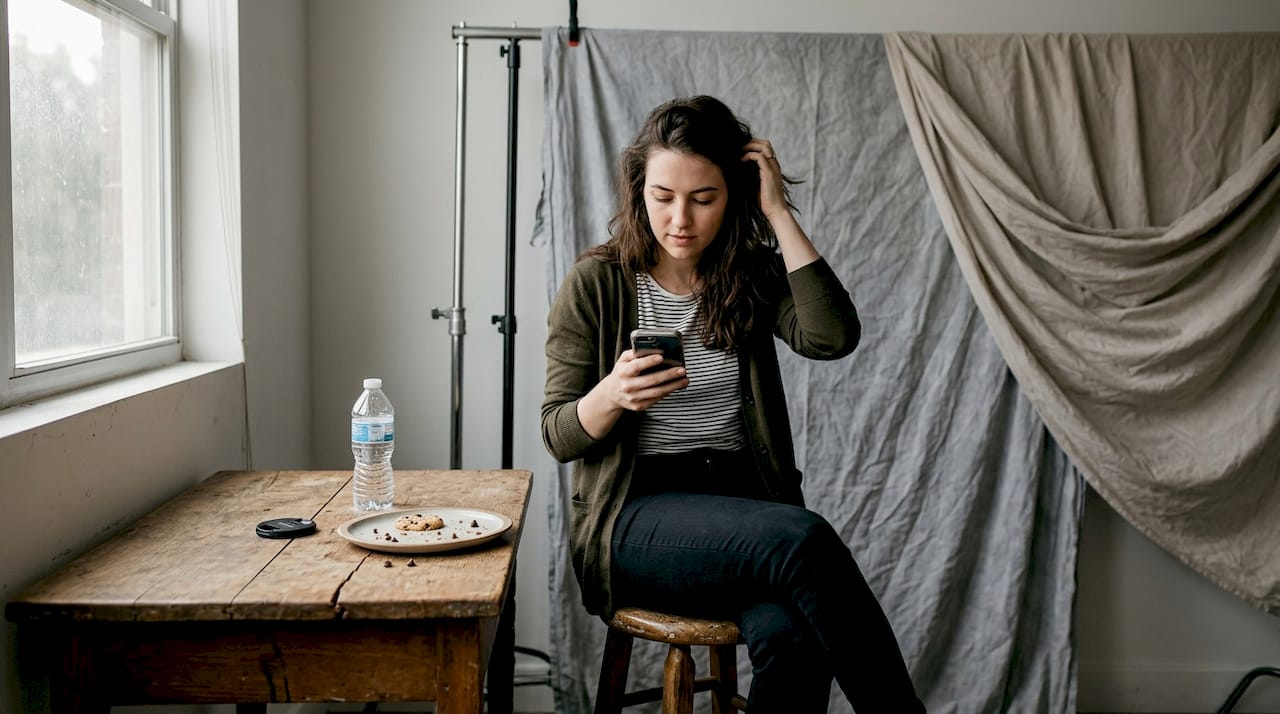
Muslin is the classic portrait photographer’s choice. It’s lightweight, folds into a small bundle, and drapes naturally. The downside? It absorbs spills and stains easily. Muslin is not a practical choice for food shoots. It works beautifully for weddings and lifestyle sessions where the backdrop stays dry and clean.
Canvas brings texture and depth that other materials can’t replicate. It’s often hand-painted or digitally printed and gives a fine art feel to portraits. The trade-off is weight and rigidity. Canvas is harder to transport and nearly impossible to clean once stained. Understanding backdrop quality considerations helps you weigh these trade-offs before committing.
According to a canvas material comparison, canvas is more rigid and structured than softer woven fabrics, which explains both its durability and its limitations in portable setups.
Paper is the budget-friendly option for high-volume sessions. It’s seamless, comes in rolls, and creates a clean, consistent background. The catch is that paper is not reusable once it’s scuffed or dirty. You simply cut and roll to a fresh section.
Here’s a quick breakdown of cleaning ease by material:
- Vinyl: Wipe clean with a damp cloth
- Muslin: Machine wash, but may shrink or wrinkle
- Canvas: Spot clean only, stains are often permanent
- Paper: Replace the soiled section, no cleaning needed
Cleaning ease is one of the most underrated factors in backdrop selection. For food photographers especially, a material that can’t be wiped clean between shots adds unnecessary time and cost to every session.
Some estimates suggest that photographers working in food and product niches replace stained or damaged backdrops several times per year when using materials that aren’t designed for easy cleanup. Vinyl and rigid boards are preferred for food photography for easy cleanup and neutral color, making them the smarter long-term investment.
Choosing a backdrop for portability and shoot efficiency
With a clearer view of each material’s properties, let’s focus on how portability and efficiency affect working photographers.
If you shoot on location regularly, portability isn’t a bonus feature. It’s a requirement. Heavy canvas rolls or rigid boards simply don’t fit into a travel kit. Vinyl and muslin are the two materials that genuinely work for mobile photographers.
Here’s a step-by-step approach to streamlining your backdrop selection for travel and on-location work:
- Identify your primary shoot type. Food and product shoots need wipeable materials. Portraits and weddings can use fabric.
- Check your transport setup. Can you carry a roll, or do you need something that folds flat?
- Consider setup time. Vinyl rolls out quickly. Muslin needs hanging or clamping. Factor in how much time you have on-site.
- Think about storage at the location. Some venues have limited space. Compact materials win in tight spots.
- Plan for cleanup between shots. If you’re doing multiple setups in one day, easy-clean materials save real time.
For choosing the right backdrop on location, vinyl is often the most practical choice because it handles both portability and cleanup.
| Material | Portability | Setup time | Storage needs |
|---|---|---|---|
| Vinyl | High | Fast | Rolls or folds |
| Muslin | Very high | Moderate | Folds flat |
| Canvas | Low | Slow | Bulky roll |
| Paper | Medium | Fast | Requires a stand |
| Rigid boards | Low | Fast | Flat, large footprint |
Exploring essential backdrop ideas can also help you plan a versatile kit that covers multiple scenarios without overpacking.
Vinyl and rigid boards provide efficient cleaning and quick changeover for food and product shoots, which is why many working photographers keep at least one vinyl option in their kit at all times.
Pro Tip: Build a two-material kit. Keep one vinyl backdrop for food and product work, and one muslin or paper option for portraits. This covers most professional scenarios without adding too much weight to your gear bag.
Color, finish, and texture: Making your backdrop work for you
Once you’ve chosen your material, it’s time to fine-tune your selection to color, finish, and texture for optimal results.
Color is obvious. But finish and texture? Those are the details that separate average shots from truly polished ones. A glossy finish on a vinyl backdrop will catch light and create unwanted reflections. A matte finish absorbs light and keeps the focus on your subject.
Texture adds depth without distraction. Subtle surface variation, like a faint stone grain or a soft wood pattern, gives your images a grounded, realistic feel. Strong patterns or busy textures pull the viewer’s eye away from the product or food you’re trying to showcase.
Neutral, desaturated colors with subtle texture enhance freshness in food photography. This is why marble, concrete, and aged wood tones are so popular in food and product work. They complement without competing.
Here’s a quick guide to matching backdrop choices with shoot type:
- Food photography: Matte finish, neutral tones (white, gray, beige, aged wood), subtle texture
- Product photography: Clean neutrals, matte or satin finish, minimal texture
- Portrait photography: Soft gradients, mid-tones, light texture or solid colors
- Wedding photography: Soft whites, blush, sage, or classic gray with minimal texture
For more detail on pairing color and texture with your subject, the food backdrop tips guide covers this thoroughly. You can also browse popular backdrop styles to see how different finishes look in real shoots.
Pro Tip: Avoid glossy finishes and strong geometric patterns for food and product work. They create distracting reflections and compete with your subject for attention.
Finish also affects how your backdrop ages. Matte vinyl holds up better over time and doesn’t show surface scratches as visibly as glossy options.
Our take: What most photographers miss when comparing backdrop materials
Here’s what we’ve seen time and again. Photographers make material decisions based on price or what looks good in a product photo. They skip the practical questions. How will I clean this? How will I store it? How long will it last through weekly shoots?
Cleaning ease and color accuracy have a bigger impact on your results than most people expect. A backdrop that photographs beautifully but stains after one food shoot isn’t a good investment. A material that travels well but wrinkles badly under studio lights costs you time in post-processing.
The right material isn’t just a backdrop. It’s a creative tool that saves time and sharpens your results.
We also see photographers underestimate how much backdrop condition affects color accuracy in editing. A faded or stained background changes the light it reflects, which shifts your white balance and skin tones. That’s extra editing time on every single shot.
For a broader view of how material choices connect to your overall creative setup, exploring lifestyle backdrop ideas can open up new approaches you may not have considered.
Choose materials that work as hard as you do.
Find your ideal backdrop solution with Instant Backdrops
You now have a clear picture of what each material offers and where each one fits in a professional workflow. The next step is finding backdrops that actually deliver on those qualities.
Instant Backdrops offers a curated range of vinyl, canvas, and specialty backdrops built for professional results. Every backdrop is designed with photographers in mind, from spill-proof surfaces for food and product shoots to rich, textured prints for lifestyle and wedding work. Whether you need a portable kit for on-location shoots or a set of studio-ready backgrounds, you’ll find options that match your workflow and elevate your images. Browse the full collection and find your ideal match today.
Frequently asked questions
What material backdrop is best for food photography?
Vinyl and rigid boards are best for food photography because they wipe clean easily and come in neutral tones that let food shine without distraction.
How do I clean and maintain vinyl backdrops?
Wipe vinyl backdrops with a damp cloth after each shoot. Because vinyl is non-porous, spills and stains don’t soak in, which keeps the surface looking fresh longer.
Which backdrop material is most portable for on-location shoots?
Muslin and vinyl are the most portable options. Both fold or roll compactly and set up quickly, making them the top choices for photographers who work on location regularly.
Can I use multiple materials for different types of photography?
Absolutely. Keeping a two-material kit, such as vinyl for food and product work plus muslin for portraits, gives you the flexibility to handle a wide range of shoot types without carrying excess gear.
Are neutral colors always best for product and food shoots?
Neutral, desaturated tones are strongly preferred for product and food photography because they enhance freshness and keep the viewer’s attention on the subject rather than the background.
Recommended
- Backdrop material quality: how to choose for professional photos – Instant Backdrops
- How to choose the right backdrop for photography – Instant Backdrops
- Backdrops in E-Commerce: Boost Product Appeal Fast – Instant Backdrops
- 12 backdrop styling ideas to elevate your photography – Instant Backdrops
- What is blackout fabric? Benefits, uses, and DIY tips – Fabric Store in Columbia, SC | Drapery Making Services