








Role of Backdrop in Product Photography Success
Finding the right backdrop often means overcoming frustrations with unwanted reflections, wrinkles, and unrealistic textures that distract from your product. The backdrop you choose is not just decoration—it is the foundation of your brand’s visual story and drives customer perception. This guide helps professional photographers and influencers select high-quality, portable backdrops that solve common issues, enhance realism, and support workflow efficiency for standout product presentation.
Table of Contents
- Backdrop Fundamentals In Product Photography
- Comparing Backdrop Types And Materials
- Key Features For Professional Results
- Common Challenges And How To Avoid Them
- Maximizing Visual Impact With Backdrops
Key Takeaways
| Point | Details |
|---|---|
| Backdrop Importance | The choice of backdrop is crucial in shaping viewer perception and enhancing product appeal. A well-selected backdrop amplifies product features and reinforces brand messaging. |
| Material Selection | Different materials affect durability, reusability, and image quality. Choosing the right material based on product type and shooting conditions can streamline your workflow and improve results. |
| Impact on Purchasing Decisions | A backdrop influences buyer emotions and attention, making it vital to select one that draws focus to the product. Consistency in backdrop use can enhance brand trust and perceived quality. |
| Testing and Preparation | Pre-shoot testing with actual products ensures that backdrops function effectively under intended lighting conditions, preventing costly reshoots and edits. |
Backdrop Fundamentals in Product Photography
Your backdrop is far more than just a blank wall behind your product. It’s the foundation of your entire image and directly shapes how viewers perceive what you’re selling. The right backdrop can transform an ordinary product shot into a compelling visual that drives engagement and conversions.
Backdrops serve multiple critical functions in product photography. They establish context, control viewer attention, and reinforce brand messaging. A well-chosen backdrop removes distractions while adding visual interest that complements rather than competes with your product.
Understanding Backdrop Types
Different backdrop styles serve different purposes in your workflow. Your choice depends on your product, target audience, and brand identity. Here are the main categories:
- White backgrounds create a clean, minimalist aesthetic ideal for e-commerce product listings and detailed shots
- Colored backdrops add emotional depth and align with seasonal campaigns or brand personality
- Textured surfaces provide dimension and visual interest without overwhelming the product
- Environmental settings place products in real-world contexts, helping customers envision actual usage
Each style has distinct advantages. Solid backgrounds isolate products effectively, making them perfect for highlighting specific features. Textured and contextual options tell a story and build emotional connections with your audience.
Here’s a quick reference for how backdrop type influences product image strategy:
| Backdrop Type | Visual Impact | Ideal Usage |
|---|---|---|
| White | Highlights details, clean look | E-commerce, minimalist brands |
| Colored | Adds mood, brand alignment | Campaigns, lifestyle brands |
| Textured | Depth and visual interest | Artisanal products, storytelling |
| Environmental | Context and realism | Demonstrating product use |
Why Backdrop Selection Matters
Your backdrop directly influences purchasing decisions. It guides viewer focus, sets mood, and communicates brand values before customers read a single word. Poor backdrop choices can undermine even perfect lighting and composition.
The backdrop isn’t background noise—it’s an active design element that shapes perception and drives action.
A cluttered or mismatched backdrop distracts from your product. A thoughtfully selected backdrop amplifies visual impact and simplifies post-production editing. Consistency across your product line also depends on maintaining backdrop coherence, which builds professional credibility.
Key Considerations for Selection
Choosing the right backdrop requires understanding several factors:
- Product type and features—what needs highlighting
- Target audience expectations and preferences
- Brand identity and campaign messaging
- Platform requirements (e-commerce sites, social media, print)
- Lighting conditions and how backdrops interact with light
Selecting backdrops that support your post-production workflow reduces editing time and ensures consistency. Consider whether you need easy background removal, color correction flexibility, or minimal retouching.
Your backdrop choice also affects shooting logistics. Durable, stain-resistant materials work best for food photography or products prone to spills. Portable options give you flexibility across multiple shooting locations.
Pro tip: Test your backdrop with actual product samples and final lighting before committing to a full shoot—this prevents costly reshoots and ensures your backdrop supports your creative vision.
Comparing Backdrop Types and Materials
Not all backdrops are created equal. The material you choose directly impacts durability, visual quality, ease of use, and post-production workflow. Understanding the strengths and weaknesses of each option helps you invest in backdrops that work for your specific shooting style.

Each material serves different product photography needs. Your choice affects everything from cleanup time to the final image aesthetic. The right selection saves time, reduces frustration, and elevates your final deliverables.
Material Options Explained
Vinyl backdrops are waterproof, durable, and easy to clean, making them ideal for food, cosmetics, or any messy product shoots. They’re highly reusable and can withstand spills without damage. Vinyl also offers excellent color vibrancy and handles close-up shots without showing wear.
Seamless paper provides a smooth, non-reflective surface perfect for professional, high-quality images. It creates an ultra-clean aesthetic but sacrifices durability and reusability. Paper works beautifully for single-session shoots or when you need a fresh, pristine look every time.
Key Material Comparison
Here’s how the main backdrop materials stack up against each other:
| Material | Durability | Reusability | Cleanup | Best For |
|---|---|---|---|---|
| Vinyl | Excellent | High | Easy (wipe down) | Food, cosmetics, spill-prone products |
| Paper | Low | Single use | Minimal | Clean, premium aesthetic shots |
| Fabric | Good | High | Machine washable | Textured, natural product styling |
| Wood/Textured | Very High | Very High | Varies | Artisanal, vintage, lifestyle products |
Choosing the Right Material
Consider these factors when selecting backdrop materials:
- Product type determines how much wear your backdrop needs to handle
- Shoot frequency impacts whether reusability matters for your budget
- Cleanup requirements affect your workflow efficiency
- Aesthetic goals dictate which textures and finishes support your brand
- Storage space influences whether you need compact, rollable options
Food photographers lean toward vinyl for obvious reasons—spills happen constantly. Fashion and lifestyle shooters often prefer fabric or textured materials that add visual dimension. E-commerce sellers benefit from seamless options that simplify background removal and editing.
The cheapest backdrop isn’t the best investment if it falls apart after three shoots or requires hours of cleanup.
Think long-term value. A premium vinyl backdrop costs more upfront but lasts years with proper care. Seamless paper requires regular replenishment but offers unmatched aesthetic simplicity for certain product categories.
Pro tip: Start with one versatile vinyl backdrop in a neutral tone, then expand with specialty materials as your client base and shooting needs evolve—this approach balances budget constraints with quality growth.
Key Features for Professional Results
Not every backdrop delivers professional-quality results. The difference between average and exceptional product photography comes down to specific features that separate quality backdrops from mediocre alternatives. Understanding what to look for helps you invest in solutions that actually improve your shots.
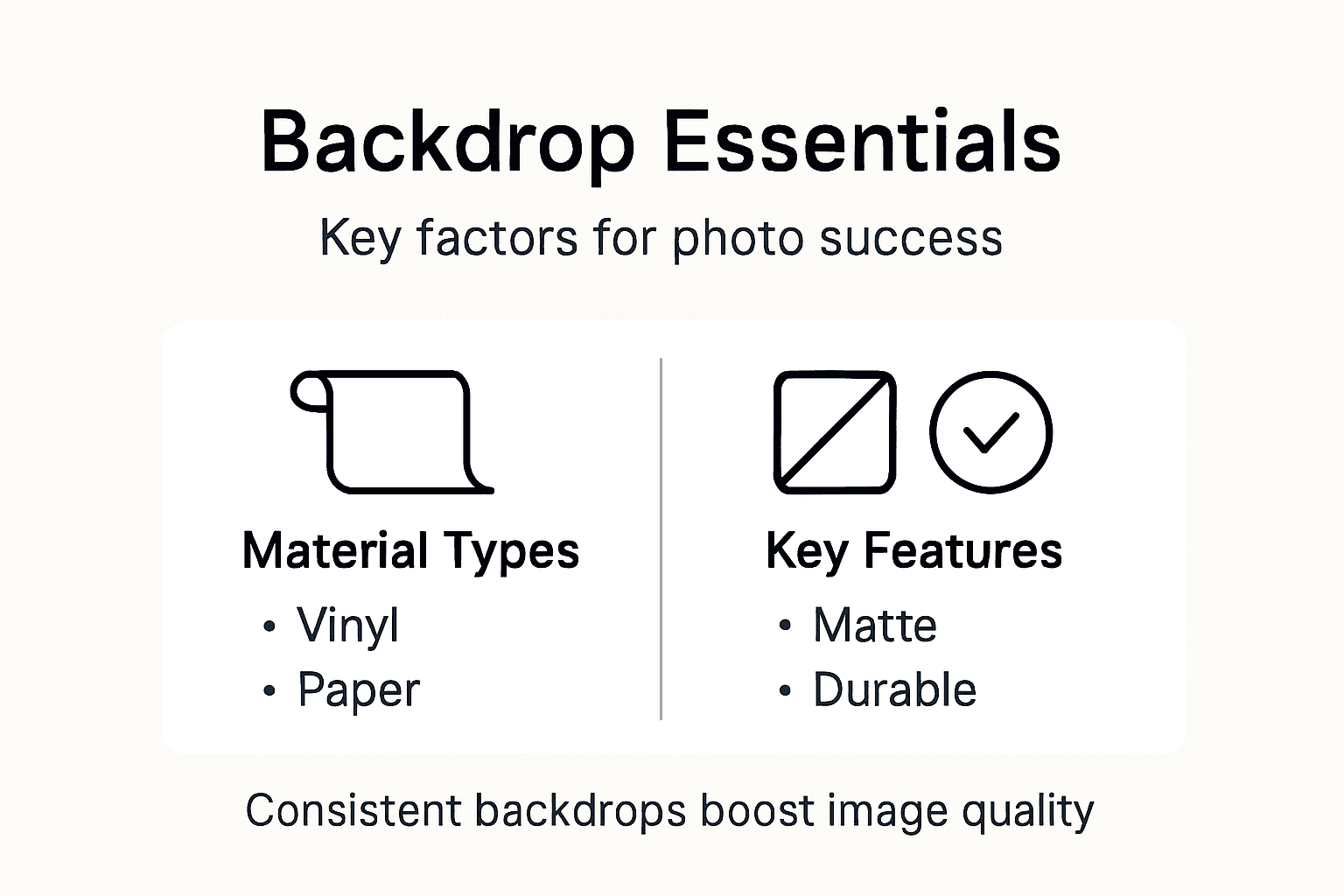
Professional backdrops share common characteristics that elevate image quality and streamline your workflow. These features directly impact how products appear, how much editing you’ll need, and ultimately, conversion rates.
Essential Backdrop Features
Look for these critical qualities in any professional backdrop:
- Matte, non-reflective surfaces minimize glare and unwanted reflections, especially critical for glossy or shiny products
- Color accuracy ensures consistent representation across all your product images and maintains brand identity
- Wrinkle resistance reduces post-shoot cleanup and editing time
- Durable construction withstands repeated use without degradation or visible wear
- Easy-to-clean materials support quick turnarounds between shoots
Matte finishes reduce unwanted reflections on glossy products without requiring special lighting techniques. This alone saves hours in post-production editing.
Consider these backdrop features and their effects on workflow efficiency and image quality:
| Feature | Benefit | Business Impact |
|---|---|---|
| Matte Surface | Reduces glare | Less editing, faster turnaround |
| Color Accuracy | Consistent branding | Strengthens trust, fewer returns |
| Wrinkle Resistance | Maintains image quality | Saves retouching time, reliable shots |
| Durability | Long-lasting use | Lowers replacement cost |
Beyond Basic Properties
Professional results require more than durability. Your backdrop should create visual depth and enhance perceived product quality. Subtle texture or controlled gradients add dimension without overwhelming the subject.
Consistency matters enormously. Using the same backdrop across product lines builds brand trust and creates a cohesive aesthetic. When customers see products photographed against consistent backgrounds, they perceive higher quality and professionalism.
The Psychology of Backdrop Selection
Color choice directly influences buyer emotions and purchasing behavior. Neutral tones work universally, while strategic color choices can enhance specific product categories.
A professional backdrop doesn’t distract—it amplifies. Every visual element should push focus toward your product, not compete with it.
Your backdrop should create a distraction-free environment that allows products to command attention. Versatility also matters. The ability to swap backgrounds for different product categories or seasonal campaigns keeps your content fresh without complete studio overhauls.
Quality Indicators
When evaluating backdrops, assess these markers of professional quality:
- Material thickness and construction method
- Print resolution and color vibrancy up close
- Stain and spill resistance documentation
- Wrinkle retention after rolling or folding
- Color consistency under different lighting conditions
Investing in high-resolution prints matters especially for close-up product shots. Low-quality prints show pixelation and color banding when viewed at full scale.
Pro tip: Request sample swatches or test prints before committing to full-size backdrops—this prevents investing in materials that underperform under your actual lighting setup and camera system.
Common Challenges and How to Avoid Them
Every backdrop setup encounters problems. Reflections ruin glossy product shots. Colors shift under different lighting. Wrinkles and creases mar high-resolution images. Understanding common pitfalls and their solutions transforms frustration into polished final results.
Most backdrop challenges are predictable and preventable with the right approach. The key is identifying issues before they derail your shoot.
Reflections and Glare Issues
Unwanted reflections on glossy products occur when backdrops have shiny or reflective surfaces. This creates distracting hotspots that pull viewer focus away from your product. Matte backdrops with subtle texture eliminate this problem without requiring complex lighting adjustments.
Neutral colored backgrounds also prevent unwanted color casts. Warm or cool tones can shift product colors in unexpected ways, forcing extensive post-production correction.
Lighting and Shadow Problems
Managing surface reflections and ensuring even light diffusion challenge many photographers. Harsh shadows obscure product details and create unflattering depth. Backdrops engineered with controlled reflectivity and diffusive qualities handle these issues gracefully.
Gradient backdrops or surfaces with tailored textures create gradual shadow transitions that add dimension without distraction. This prevents the flat, lifeless look that plagues amateur product shots.
Physical Imperfections
Creases, wrinkles, and color mismatches become glaringly obvious in high-resolution images. These small flaws compound in post-production, requiring hours of retouching. Preventing them saves significant time and frustration.
Regular backdrop maintenance keeps them photo-ready. Store backdrops flat or loosely rolled rather than tightly folded. Inspect surfaces before every shoot for creases or debris.
Testing and Prevention Strategies
Avoid common pitfalls with these practical steps:
- Test backdrops with your actual products before committing to full shoots
- Shoot test images under your typical lighting conditions
- Review images at full resolution to catch imperfections early
- Document which backdrops work best for specific product categories
- Maintain backdrops according to manufacturer guidelines
Testing reveals color shifts, reflection issues, and dimensional problems before they waste your time. Proper lighting setup ensures even illumination and color consistency throughout your images.
An hour of testing prevents days of editing and re-shooting frustration.
Digital editing and background swapping technologies can rescue problematic shots, but prevention beats correction every time.
Pro tip: Keep a detailed log of backdrop performance with different products, lighting setups, and angles—this reference guide prevents repeating mistakes and accelerates setup on future shoots.
Maximizing Visual Impact With Backdrops
Your backdrop choice directly determines whether viewers engage with your product or scroll past. The difference between forgettable and compelling product photography comes down to deliberate backdrop selection that amplifies your product and reinforces brand messaging. Strategic backdrop decisions transform ordinary shots into conversion machines.
Maximizing visual impact requires understanding how backdrop properties interact with lighting, composition, and product features. Every element works together to guide viewer attention and evoke desired emotional responses.
Backdrop Selection Strategy
White backdrops create clean, bright images that highlight product details and work universally for e-commerce and minimalist aesthetics. Colored backdrops inject energy and thematic emphasis aligned with seasonal campaigns or brand personality. Environmental backdrops add storytelling, situating products in relatable usage contexts that help customers envision actual ownership.
Your choice depends on brand identity and target audience expectations. Each backdrop type serves distinct strategic purposes.
The Interplay of Light and Texture
Backdrop texture and material profoundly influence how light behaves in your images. Subtle texture or gradients guide viewer focus toward key product details without distraction. These surface properties create depth perception that makes products appear more dimensional and appealing.
Careful lighting that interacts favorably with your backdrop enhances product shape and form dramatically. The relationship between light direction, backdrop surface, and product positioning determines final visual impact.
Strategic Composition Elements
Maximizing impact involves coordinating multiple visual elements:
- Backdrop color psychology influences emotional response and purchasing intent
- Surface texture creates depth and prevents flat, lifeless appearance
- Lighting direction reveals product contours and highlights key features
- Composition balance uses backdrop to frame and isolate the subject
- Brand consistency maintains visual cohesion across all product images
These elements work synergistically. A beautiful backdrop without proper lighting falls flat. Perfect lighting on a wrong backdrop undermines your entire shoot.
Consistency Drives Conversion
Consistent backdrop usage across your product catalog signals professionalism and builds consumer trust in brand quality.
Consistent editing style and preset usage ensure cohesive presentation. When customers see all products photographed with similar backdrop approaches, perceived quality increases significantly. This consistency also simplifies your workflow—you develop efficient setups that translate across product categories.
Digital background swapping offers flexibility for adapting existing images to new campaigns. However, shooting right the first time with proper backdrop selection beats extensive post-production every time.
Planning Your Session
Proper session planning maximizes backdrop effectiveness:
- Choose backdrop material and color based on product features
- Plan lighting setup that complements backdrop surface properties
- Test compositions before committing to full shoots
- Document successful backdrop and lighting combinations
- Apply consistent editing presets across the entire session
Planning prevents wasted shots and ensures every image maximizes visual impact from capture through final delivery.
Pro tip: Create a visual reference board showing successful backdrop, lighting, and composition combinations for each product category—this accelerates setup on future shoots and maintains consistency across your growing portfolio.
Elevate Your Product Photography With the Perfect Backdrop
The article highlights the critical role a backdrop plays in creating striking product images that captivate and convert audiences. Common challenges include managing glare, color accuracy, and achieving consistent brand presentation. If you want to overcome issues like distracting reflections and wrinkles while ensuring your product stands out, choosing the right backdrop material and design is key. Instant Backdrops understands these pain points offering ultra-realistic, durable, and stain-resistant vinyl backdrops that simplify shoots and reduce editing time.
Explore our Featured backdrop collection for product & food photography – Instant Backdrops for versatile, professional options that align with your visual storytelling needs.
Transform your shoots today by selecting from our high-resolution, spill-proof backgrounds designed for flawless close-ups and vibrant color accuracy. Visit Instant Backdrops now and browse All product photography backdrops – Instant Backdrops to find the ideal backdrop that drives consistent, impactful imagery and elevates your brand presence.
Frequently Asked Questions
What types of backdrops are commonly used in product photography?
Different types of backdrops include white backgrounds for a clean look, colored backdrops to align with brand personality, textured surfaces for added dimension, and environmental settings to place products in real-world contexts.
How does the choice of backdrop affect product photography?
The backdrop influences viewer focus, sets the mood, and communicates brand values. A well-chosen backdrop can enhance visual appeal and drive purchasing decisions, while a poor choice can distract from the product.
What material is best for product photography backdrops?
Vinyl backdrops are durable and easy to clean, making them ideal for food or messy products. Seamless paper offers a clean, professional look but is usually single-use. Fabric provides texture and is machine washable, while wood or textured options work well for artisanal products.
How can I test a backdrop before a full shoot?
It’s important to test backdrops with actual product samples under your typical lighting conditions to ensure they support your creative vision. This helps identify any issues, such as color shifts or unwanted reflections, before committing to a full shoot.