








Build the ultimate commercial photography setup: pro guide
TL;DR:
- A commercial photography setup relies on controlled environments, reliable lighting, quality backdrops, and systematic workflows to produce consistent results. Client satisfaction depends on visual consistency, brand alignment, and timely delivery, not gear upgrades alone. Investing in organized systems, backup equipment, and high-quality vinyl backdrops strengthens your reputation and encourages repeat business.
Most photographers chase the next lens upgrade or the latest camera body, convinced that better gear is the ticket to landing bigger clients. Here’s the reality: your camera is rarely what clients remember. What they remember is whether the images looked consistent, whether the backdrop matched their brand, and whether you delivered on time without drama. A true commercial photography setup is built on controlled environments, reliable lighting, quality backdrops, and airtight workflows. This guide breaks down each of those pillars and shows you how to build a setup that wins repeat business.
Table of Contents
- What defines a commercial photography setup?
- The essential components: Equipment, lighting, and backdrops
- Choosing and using backdrops for different commercial needs
- Workflow tips: Consistency, brand repeatability, and client satisfaction
- What most guides miss: The invisible edge of a commercial setup
- Upgrade your setup with instant, professional backdrops
- Frequently asked questions
Key Takeaways
| Point | Details |
|---|---|
| Control is everything | A commercial photography setup prioritizes controlled space, lighting, and repeatable processes for reliable results. |
| Vinyl outperforms other backdrops | Vinyl provides unmatched durability and brand consistency for high-volume studio work. |
| Backup = Business continuity | Redundant equipment and workflow protocols are non-negotiable for pros working with top-tier clients. |
| Systems drive growth | Efficient documentation and repeatable workflows keep clients happy and jobs profitable. |
What defines a commercial photography setup?
Let’s clear up a common misconception first. A commercial photography setup is not just a nice camera on a tripod in a tidy room. It’s a controlled system designed to produce consistent, repeatable results for paying clients, whether you’re shooting jewelry, apparel, lifestyle scenes, or packaged goods.
The environment matters enormously. Natural light alone is unreliable. Client-ready commercial studios control every light source, manage reflections, and maintain a clean visual field from session to session. If your setup produces stunning results on a Tuesday morning but mediocre images on a cloudy Thursday afternoon, that’s not a commercial setup. It’s a hobby space with good days.
A practical studio setup explained defines the approach clearly: build a controlled space combined with a chosen lighting topology, a clean or brand-matched backdrop, and a repeatable documentation system for consistent results across volume.
Brand consistency and repeatability are the true hallmarks. When a skincare brand comes back for their third seasonal shoot, your job is to deliver images that look like they belong in the same visual family as everything you’ve shot for them before. That only happens when your setup is engineered to replicate results, not just stumble into them.
Here’s a quick-reference list of the core components every commercial setup needs:
- Controlled space (managed light, clean backgrounds, minimal distractions)
- Lighting system (key, fill, and optional background light)
- Quality backdrops matched to client branding and shoot type
- Camera and lens kit suited to the product or talent being shot
- Workflow systems for shot lists, file naming, and delivery
- Backup gear to handle on-set failures without losing a session
Understanding how product appeal with backdrops directly drives commercial outcomes is essential for every photographer looking to elevate their studio environment. The backdrop isn’t a finishing touch. It’s a foundation.
The essential components: Equipment, lighting, and backdrops
With a clear definition in place, let’s look at what actually fills a commercial setup and what makes each component earn its place.
Equipment redundancy is the unglamorous hero of commercial photography. A single camera failure mid-shoot is a client-relationship problem, not just a technical one. Professional and semi-professional studios carry backup camera bodies, spare triggers, extra batteries, and redundant memory cards. It sounds like overkill until the day your primary shutter misfires during a four-hour product marathon. Professional readiness for commercial jobs includes operational infrastructure beyond the shoot, covering equipment redundancy, contracts, insurance, and a reliable inbound marketing engine to deliver high-budget work on schedule.
Lighting is where most photographers invest the most thought, and rightly so. A standard commercial lighting topology uses three points: a key light (the primary source), a fill light (to soften shadows), and an optional background light (to control what happens behind the subject). For product photography, a fourth light, specifically a rim or hair light, can add separation. The specific setup varies by genre, but the principle stays the same: control every photon that reaches your sensor.
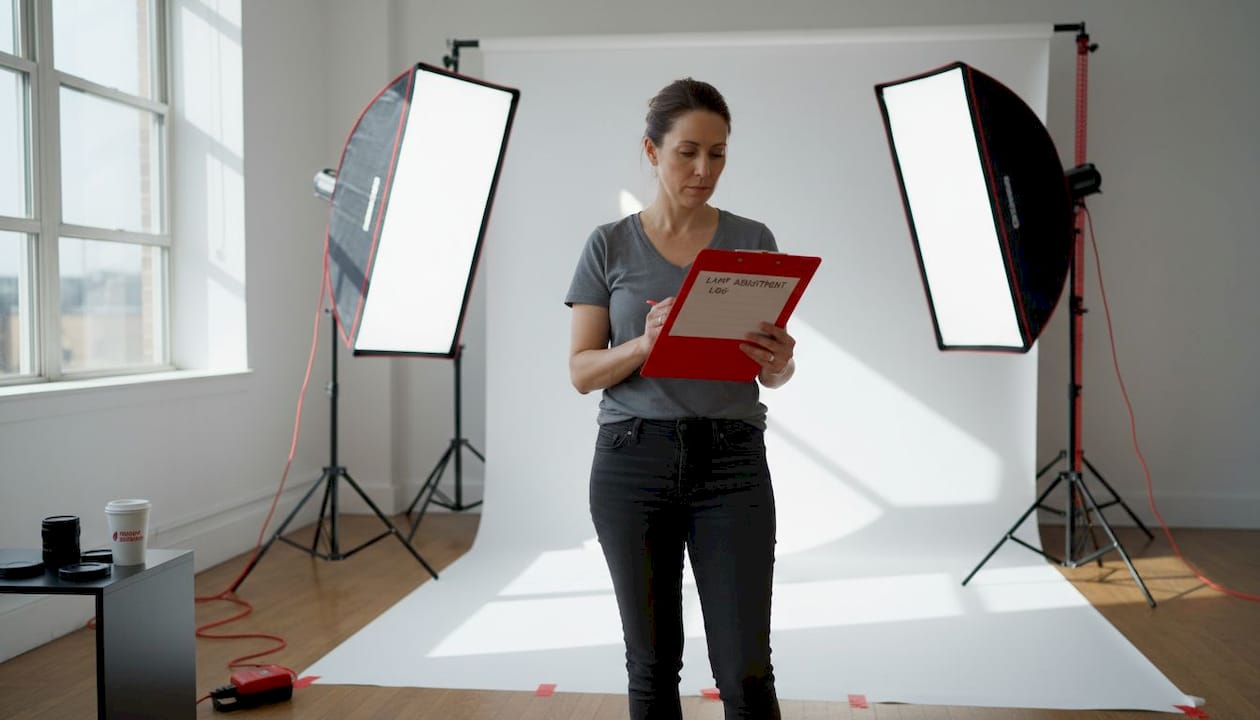
Backdrops are the third pillar, and arguably the most underrated. Choosing the right professional backdrop materials determines how well your images hold up in post-production and how cleanly your client’s product pops against the background. Vinyl backdrops have become a professional standard because they’re non-porous, spill-proof, and produce zero texture interference on close-up shots.
Understanding how to maximize backdrops in lifestyle shoots adds another dimension to your commercial versatility.
Pro Tip: Before every recurring client session, photograph your backdrop with your lighting setup and no subject. Compare it to your reference shot from the previous session. If colors, shadows, or highlights don’t match, fix it before the client arrives.
Here’s a practical table to keep each component organized:
| Component | Role | Best Practice | Quick Tip |
|---|---|---|---|
| Camera body | Captures the image | Use RAW format always | Keep a backup body on-site |
| Lighting system | Controls exposure and mood | Use consistent power ratios | Meter every session before shooting |
| Vinyl backdrop | Sets visual tone and background | Clean between every session | Use themed textures for brand alignment |
| Lenses | Determines perspective and depth | Choose focal length by shoot type | Prime lenses for product; zoom for fashion |
| Workflow software | Manages files and delivery | Automate naming and export | Use tethering for real-time client review |
| Backup gear | Prevents session failure | Carry one extra of every critical item | Test backup gear monthly |
Choosing and using backdrops for different commercial needs
Selecting the right backdrop is not a generic decision. Each commercial genre brings its own requirements, and matching your backdrop to the shoot type is one of the fastest ways to improve image quality and client satisfaction.
Product photography typically calls for clean, neutral, or textured backdrops. Marble, concrete, and stone-effect vinyl surfaces add visual richness without competing with the product itself. A skincare brand wants a soft, high-end feel. A tech product might need a darker, more industrial texture. Getting this right means your images require less styling and less post-production cleanup.
Fashion photography opens up more creative range. Here, backdrops function as part of the overall narrative. A textured wall backdrop, a warm wooden surface, or a muted stone texture can anchor the mood of an entire lookbook. The backdrop styling ideas that work best in fashion typically complement skin tones and garment colors without overpowering them.
Lifestyle photography demands backdrops that feel lived-in and contextual. Think kitchen surfaces for food and beverage content, wooden textures for artisan products, or softly aged surfaces for vintage-feel brand stories. The backdrop creates the world the product inhabits.
A clean, brand-matched backdrop is a core part of any practical commercial setup, ensuring consistent results across high-volume work. That standard doesn’t happen by accident. Here’s a step-by-step process for matching your backdrop to each client and shoot type:
- Brief the client on their brand palette before selecting a backdrop. Get hex codes or reference images from their existing marketing material.
- Pull two or three backdrop options that sit within their color family. Offer choices but guide the decision.
- Test the backdrop with your lighting setup before the client arrives. Shoot a stand-in product or garment.
- Document your lighting ratios and camera settings for that specific backdrop. Save them as a named preset or written profile.
- Review the test shots with the client at session start. Lock in the look before you shoot hero images.
- Photograph the setup itself at the end of each session for your reference file.
Knowing how to approach choosing the right backdrop is a skill that pays dividends on every shoot.
Vinyl vs. paper vs. fabric: Which wins for commercial work?
| Feature | Vinyl | Paper | Fabric |
|---|---|---|---|
| Durability | Very high | Low | Medium |
| Stain resistance | Excellent (spill-proof) | Poor | Fair |
| Color consistency | Highly consistent | Fades with use | Can shift with washing |
| Close-up performance | Excellent, no texture | Good, but can wrinkle | Visible texture at close range |
| Cleaning | Wipe down between shoots | Cannot clean, must replace | Requires laundering |
| Cost over time | Low (long lifespan) | High (frequent replacement) | Medium |
| Portability | Good (rolls flat) | Good but fragile | Excellent |
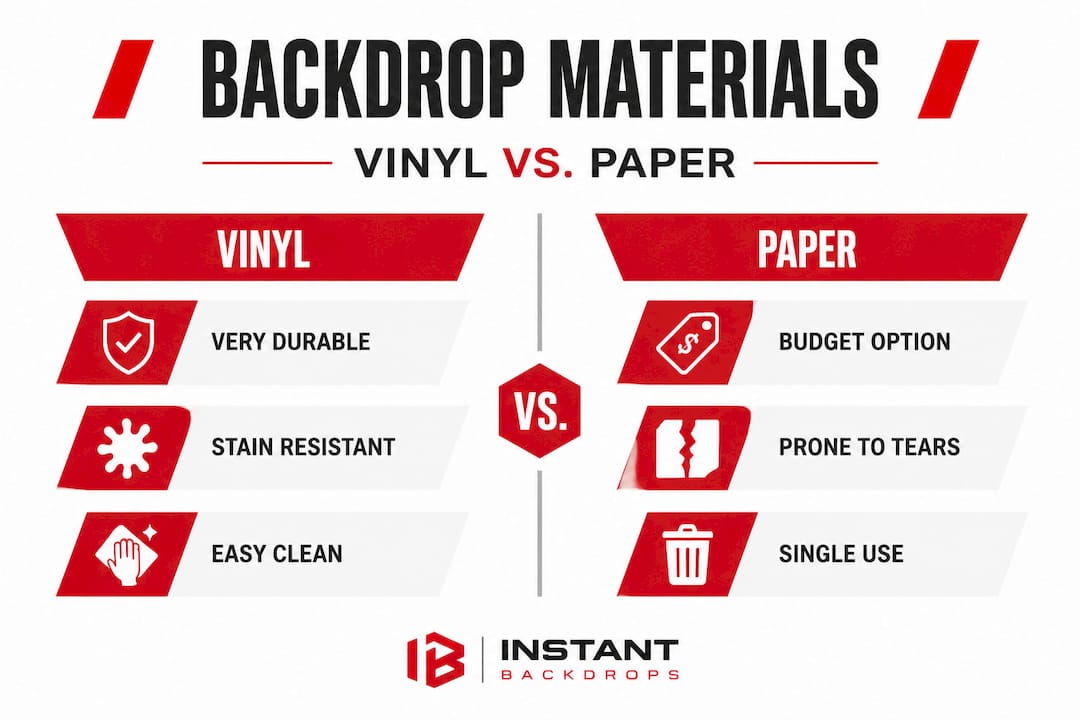
Vinyl wins for volume commercial work. Paper has its place for budget editorial sessions. Fabric works beautifully for certain fashion scenarios where texture is a feature, not a liability.
Pro Tip: Build a modular backdrop system using a sturdy stand with horizontal arms wide enough to handle your full vinyl roll width. This lets you swap between two or three backdrops in under three minutes during a multi-look shoot, saving real time on set and reducing setup fatigue.
Workflow tips: Consistency, brand repeatability, and client satisfaction
Equipment and backdrops create the physical conditions for great commercial work. Workflows keep that quality consistent across every shoot, every quarter, every client relationship.
The photographers who build the most reliable commercial practices are not always the most technically gifted. They’re the most systematized. Commercial readiness includes a repeatable documentation system for consistency, and that extends well beyond shooting to every touchpoint a client experiences.
Consistency is not a creative limitation. It’s the product you’re actually selling to commercial clients. They need to know that next month’s shoot will look exactly as polished as this one.
Here are the practical workflow habits that separate reliable commercial studios from inconsistent ones:
- Create a shot list template for each client that includes backdrop choice, lighting preset name, and framing notes. Update it after every session.
- Use tethered shooting to a calibrated monitor so clients can review images in real time. This eliminates costly reshoots.
- Build a file naming convention that includes client name, session date, shot number, and backdrop ID. Stick to it rigidly.
- Photograph a gray card and color checker at the start of every shoot for consistent white balance across all files.
- Document your lighting diagram with a quick sketch or app after each client’s first session. Store it with their client profile.
- Schedule a post-shoot debrief with the client within 48 hours of delivery. Ask what worked and what to refine next time.
- Maintain a backdrop log that tracks which backgrounds have been used for each client, how many sessions they’ve been through, and when they need replacement.
Understanding how product appeal with backdrops is sustained through consistent visual presentation ties directly into how you document and replicate your best sessions. And recognizing the power of backdrops in visual storytelling reminds you that the backdrop is never just a background. It’s half the story.
File management deserves its own attention. Disorganized archives lead to reshoots, miscommunication, and lost client trust. A clean folder structure, cloud backup, and consistent export settings (color profile, file format, resolution) should be non-negotiables in any commercial studio.
What most guides miss: The invisible edge of a commercial setup
Most photography education focuses on what you can see: gear, lighting ratios, backdrop styles. The real differentiator in commercial work is almost entirely invisible to the client. It’s the prep that happens before they arrive and the follow-through that happens after they leave.
The photographers who consistently win premium commercial work are not necessarily the ones with the best camera. They’re the ones who never let a client feel uncertainty. Every question is answered before it’s asked. Every backdrop is tested before the session. Every file is delivered before the deadline. These things don’t show up in your portfolio, but they’re exactly what gets you referrals.
Here’s the contrarian truth: your backdrop selection matters more than your camera body. A well-chosen vinyl texture sets tone, supports the brand story, and reduces post-production time dramatically. A poor backdrop choice creates hours of retouching and a visual result that feels off. Exploring backdrop ideas for pros is one of the highest-leverage investments of your research time.
The studios that grow fastest invest as heavily in their repeatable systems as in their gear. Pre-session questionnaires, backdrop libraries organized by client color palette, lighting profiles saved by shoot type: these are the tools of a true commercial operation. Your future clients notice the outcomes of these invisible processes, even if they can’t name what’s creating them.
Pro Tip: Invest as much time building your repeatable systems as you spend shopping for new gear. A documented backdrop and lighting protocol for your top three clients will generate more repeat bookings than a new prime lens ever will.
Upgrade your setup with instant, professional backdrops
You now have a clear picture of what separates a genuine commercial setup from a high-quality hobby studio. The next step is putting that knowledge into practice, and the right backdrop collection is one of the fastest upgrades you can make.
At Instant Backdrops, we specialize in premium vinyl backdrops built for exactly this kind of professional and semi-professional commercial work. Our surfaces are spill-proof, highly durable, and printed in high resolution for clean close-ups and wide lifestyle scenes alike. Whether you need a soft marble texture for product flatlay, a warm wood surface for lifestyle content, or a richly textured wall for fashion editorials, we have options designed for speed, versatility, and brand consistency. Browse our curated collections and bundle deals to build a backdrop library that supports every client brief that lands in your inbox.
Frequently asked questions
What makes a photography setup truly commercial?
A commercial photography setup includes controlled space, pro lighting, quality backdrops, redundancy, and systematic workflows to ensure client consistency and reliability across every session.
Why is vinyl recommended over paper or fabric for commercial backdrops?
Vinyl offers durability, easy cleaning, and consistent color, making it highly reliable for repetitive client work. Unlike paper, vinyl for high-volume work holds up across dozens of sessions without fading or degrading.
Do I need backup equipment for a commercial shoot?
Yes. Backup gear and redundancy are non-negotiable for commercial work. A single equipment failure can void an entire session and damage the client relationship.
How do backdrops support client brand consistency?
Brand-matched backdrops create a visual anchor that ties each shoot to the client’s existing identity, making the images immediately recognizable as part of a coherent brand family.
Recommended
- What defines a professional photography setup: expert guide – Instant Backdrops
- Photography Setup Essentials: Elevating Product Shots – Instant Backdrops
- Studio Photography Checklist: Expert Steps for Flawless Shoots – Instant Backdrops
- Food Photography Background Tips for Stunning Visuals – Instant Backdrops