






How to choose the right backdrop for photography
Choosing the wrong backdrop can undermine even the most carefully composed shot. A poorly selected background introduces unwanted color casts, distracts from your subject, or fails to convey the intended mood. Professional photographers and content creators know that backdrop selection directly impacts image quality, client satisfaction, and brand perception. This guide walks you through backdrop types, materials, sizing, color theory, and maintenance practices so you can confidently select backdrops that elevate your photography and streamline your workflow.
Table of Contents
- Understanding Backdrop Types And Their Best Uses
- Selecting The Right Material For Durability And Image Quality
- Sizing And Color Considerations For Professional Results
- Testing And Maintenance Best Practices For Long-Lasting Backdrops
- Explore High-Quality Backdrops For Your Photography Studio
- How To Choose The Right Backdrop - Frequently Asked Questions
Key takeaways
| Point | Details |
|---|---|
| Backdrop influences buyer decisions | The right backdrop enhances mood and professionalism, directly affecting how viewers perceive your work. |
| Match material to project goals | Vinyl offers durability for repeated use, while seamless paper suits single-session projects. |
| Durability affects cost-effectiveness | Proper care extends backdrop lifespan, reducing replacement frequency and long-term expenses. |
| Usable height differs from advertised | Mounting hardware and floor pooling reduce effective backdrop size by 6-8 inches. |
| Test swatches before bulk orders | Physical samples reveal true color and texture, preventing costly mismatches from digital previews. |
Understanding backdrop types and their best uses
Different photoshoot types require different backdrop considerations, and selecting the appropriate style sets the foundation for professional results. Portrait backdrops typically feature soft tones and subtle textures that flatter skin tones without competing for attention. Cream, beige, and muted gray options create a timeless aesthetic that keeps the subject front and center.
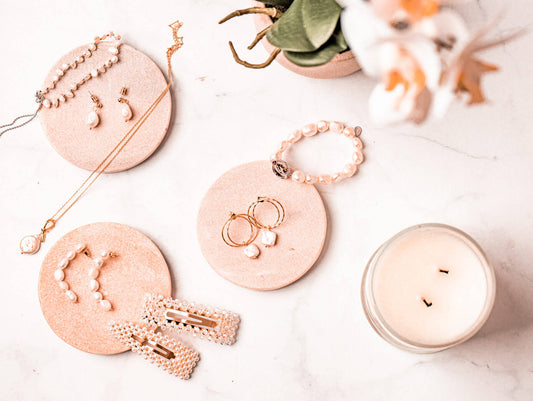
Product photography demands clean, neutral backdrops that highlight merchandise without introducing color pollution. White, light gray, and off-white backgrounds maintain accurate color rendering and simplify post-production editing. These neutral choices allow product colors to appear true to life, which is critical for e-commerce listings where buyers rely on visual accuracy.
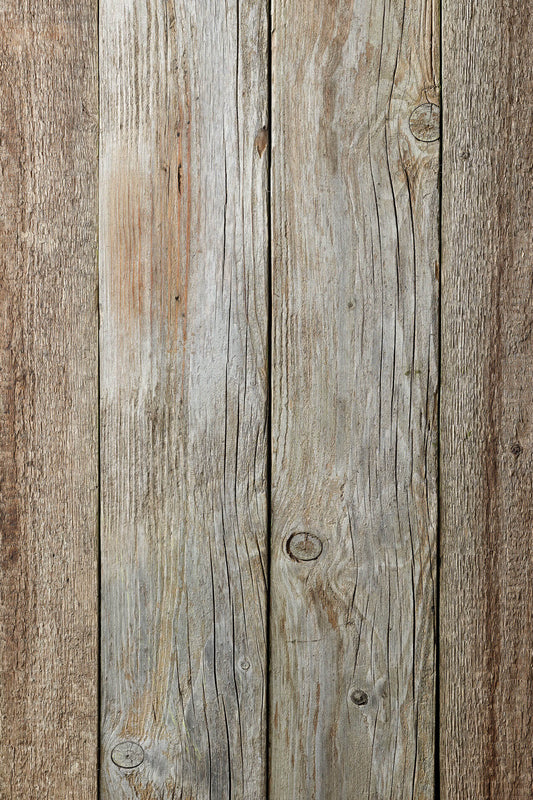
Editorial and fashion shoots often embrace bold colors or graphic prints to convey artistic expression and brand identity. Deep jewel tones, vibrant patterns, and themed photography backdrops explained create visual impact that aligns with creative concepts. Lifestyle photography benefits from printed scenes like brick walls, wooden planks, or marble surfaces that provide contextual storytelling without requiring location scouting.
Green screen backdrops serve a specialized role in video production and composite imaging. These solid chroma key surfaces enable editors to replace backgrounds digitally, offering unlimited creative flexibility in post-production. Event photography requires themed designs that match occasions, from elegant fabric drapes for weddings to branded graphics for corporate functions.
Pro Tip: Keep a small collection of versatile neutrals and one or two bold options to handle diverse client requests without excessive inventory.
Selecting the right material for durability and image quality
Material choice determines both the visual quality of your images and the longevity of your investment. Seamless paper backdrops are fragile and not reusable, typically lasting only one to three uses before showing wear, tears, or stains. Paper suits single-session projects or situations where you need a pristine surface that can be discarded after use, but the ongoing replacement costs add up quickly for high-volume photographers.
Vinyl backdrops can last for several years with proper care, making them a cost-effective choice for studios that shoot frequently. Vinyl resists spills, wipes clean easily, and maintains color vibrancy under repeated use. However, prolonged UV exposure degrades vinyl over time, so proper storage away from direct sunlight extends usable life to two to five years.
Polyester wrinkle-resistant fabrics offer moderate durability with a lifespan of three to seven years. These materials transport easily, resist creasing better than cotton or muslin, and require minimal maintenance beyond occasional washing. Polyester blends provide a middle ground between the fragility of paper and the rigidity of vinyl, appealing to photographers who travel to client locations.
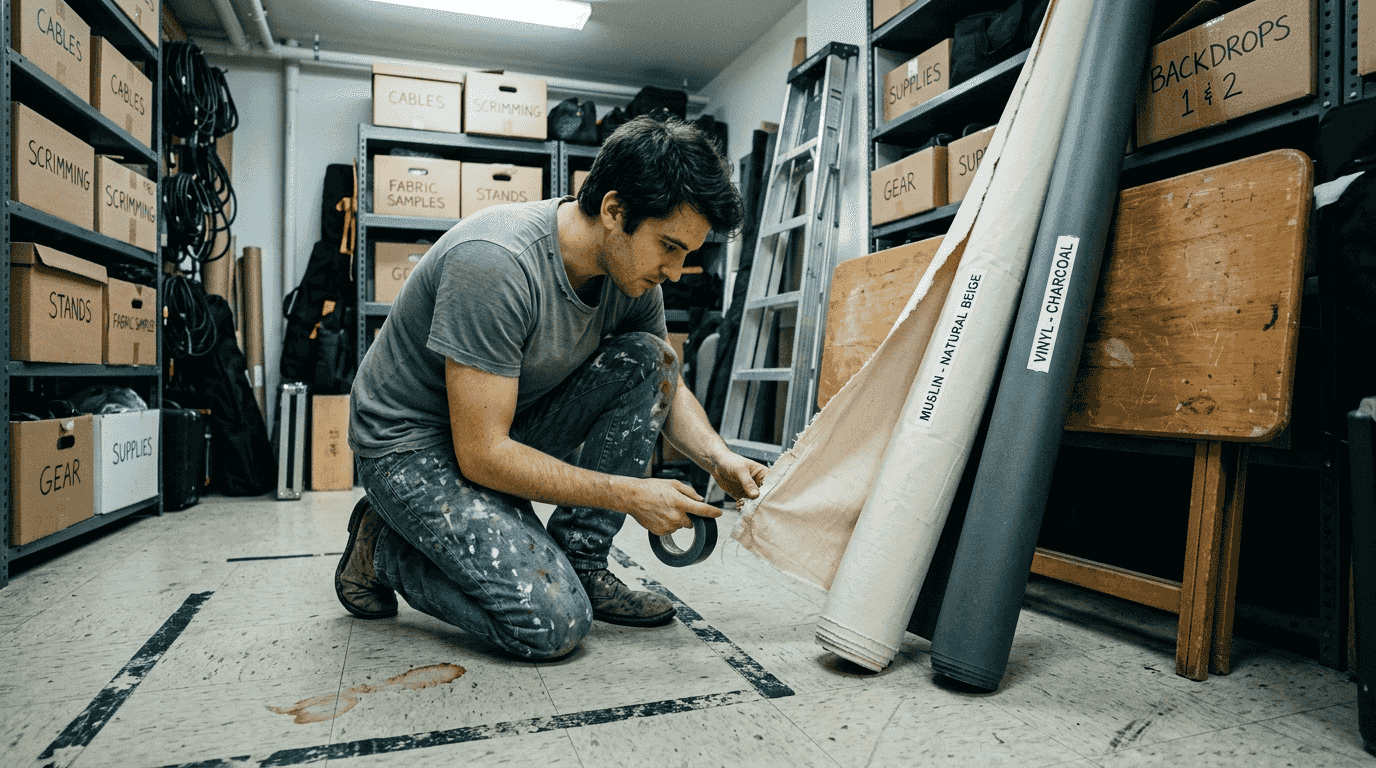
Muslin backdrops use natural fibers that create a soft, painterly aesthetic favored in fine art and portrait photography. Heavyweight muslin resists wrinkling better than lightweight versions, but all muslin requires careful handling to prevent snags and fiber damage. With proper care, muslin lasts one to two years before showing significant wear.
Material also affects light reflection and color accuracy, which are critical for quality images. Glossy vinyl can create hot spots under harsh lighting, while matte finishes absorb light more evenly. Understanding how different materials interact with your lighting setup helps you achieve consistent, professional results across sessions. For more guidance on material selection, explore backdrop materials for professional photography.
| Material | Lifespan | Durability | Best Use Case |
|---|---|---|---|
| Seamless Paper | 1-3 uses | Low | Single-session projects requiring pristine surfaces |
| Vinyl | 2-5 years | High | High-volume studios needing spill-resistant, reusable backdrops |
| Polyester Fabric | 3-7 years | Moderate | Travel photographers requiring wrinkle-resistant portability |
| Muslin | 1-2 years | Moderate | Fine art and portrait work valuing soft, painterly aesthetics |
Pro Tip: Test how your chosen material performs under your specific lighting setup before committing to large purchases, as reflective properties vary significantly between materials.
Sizing and color considerations for professional results
Backdrop dimensions must exceed your subject size to allow for floor coverage and mounting adjustments. The usable height of a backdrop is often less than advertised due to mounting hardware and floor pooling, typically reducing effective size by six to eight inches. For full-length portraits, an eight-foot backdrop may provide only seven feet of usable vertical space after accounting for mounting clips and the curve where the backdrop meets the floor.
When shooting products or tabletop scenes, ensure your backdrop extends at least 12 inches beyond the edges of your frame to prevent accidental edge visibility during composition adjustments. Wider backdrops also accommodate group shots and allow for creative cropping in post-production without revealing background edges.
White and neutral backdrops maintain accurate color rendering, making them the preferred choice in product photography where color fidelity influences purchasing decisions. Pure white can create blown-out highlights if overexposed, so many professionals opt for soft off-white or neutral grays that preserve detail while maintaining a clean aesthetic. These tones also flatter skin tones in portraiture by reflecting soft, even light onto subjects.
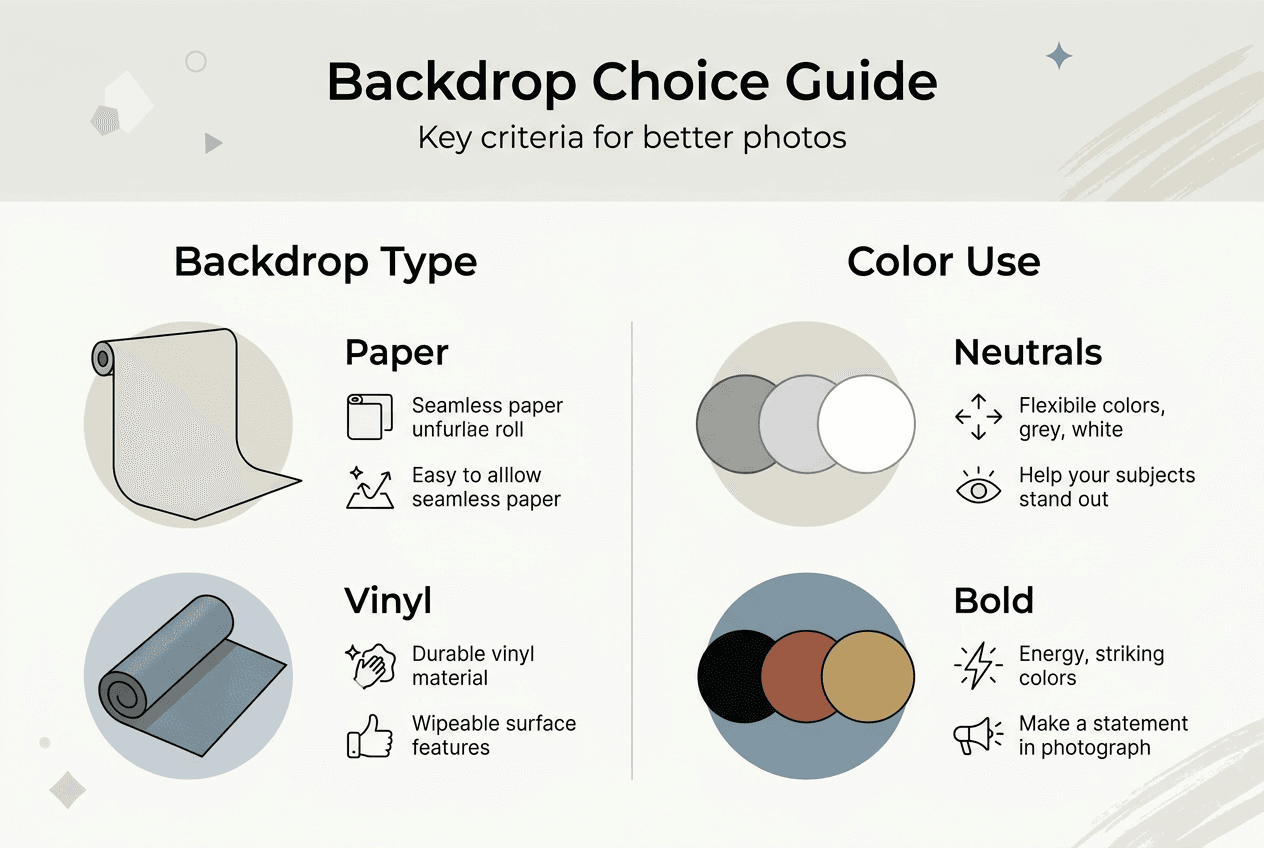
Corporate and commercial photography often requires backdrops that align with the client’s branding, so maintaining a selection of colors that complement common brand palettes expands your service offerings. Navy, charcoal, and burgundy backdrops suit professional headshots and corporate events, while pastels work well for lifestyle and family photography.
Avoid green backdrops unless you specifically need them for chroma keying, as green tones can reflect onto subjects and create unflattering color casts. Similarly, highly saturated colors may introduce color pollution that complicates white balance correction in post-production. For detailed sizing recommendations, review large backdrop sizing to match your studio dimensions and shooting style.
Pro Tip: Measure your shooting space before ordering backdrops, accounting for ceiling height, floor space, and the distance between your subject and the background to ensure proper fit.
Testing and maintenance best practices for long-lasting backdrops
Verifying backdrop quality before committing to bulk orders prevents costly mistakes and ensures color accuracy. Always request a physical swatch before bulk ordering because digital previews distort true color and neutrality, and monitor calibration varies widely across devices. A swatch allows you to test how the material interacts with your lighting, check for unwanted sheen or texture, and confirm that neutral tones render as true gray rather than tinted beige or blue.
Never use 100% cotton, rayon blends, and low-gsm knits under 220 gsm as they wrinkle and distort under tension, creating visible creases that undermine professional presentation. Low-quality fabric blends also sag over time, requiring constant readjustment during shoots and creating frustrating workflow interruptions.
Follow these steps to test and maintain backdrops effectively:
- Order swatches from multiple suppliers and photograph them under your standard lighting setup to compare color accuracy and reflective properties.
- Inspect fabric tension and weight by hanging the swatch vertically for 24 hours to check for sagging or stretching.
- Test cleaning methods on swatches before applying them to full-size backdrops, ensuring your cleaning products don’t cause discoloration or texture changes.
- Store backdrops properly by rolling vinyl options around a core tube and folding fabric backdrops along existing creases to prevent new wrinkles.
- Clean vinyl backdrops with UV-protective solutions and avoid abrasive scrubbing that can dull the surface or remove printed designs.
Proper storage extends backdrop lifespan significantly. Keep backdrops in climate-controlled environments away from direct sunlight, which fades colors and degrades materials over time. Humidity causes mold growth on natural fibers like muslin, so ensure adequate ventilation in storage areas.
Inspect tension support systems regularly, especially for stretchy pillowcase-style fabric backdrops that rely on frame tension to remain taut. Loose or damaged support frames create visible sagging that appears unprofessional in final images. For more practical advice, explore essential photography backdrop tips to optimize your backdrop investment.
Pro Tip: Create a backdrop maintenance log tracking purchase dates, cleaning schedules, and observed wear patterns to predict replacement needs and budget accordingly.
Explore high-quality backdrops for your photography studio
Now that you understand how to evaluate backdrop types, materials, sizing, and maintenance, you can confidently invest in professional-grade options that meet your studio needs. Instant backdrops for product photography offers vinyl backdrops engineered for durability and visual impact, with spill-resistant surfaces that withstand the demands of high-volume shooting.
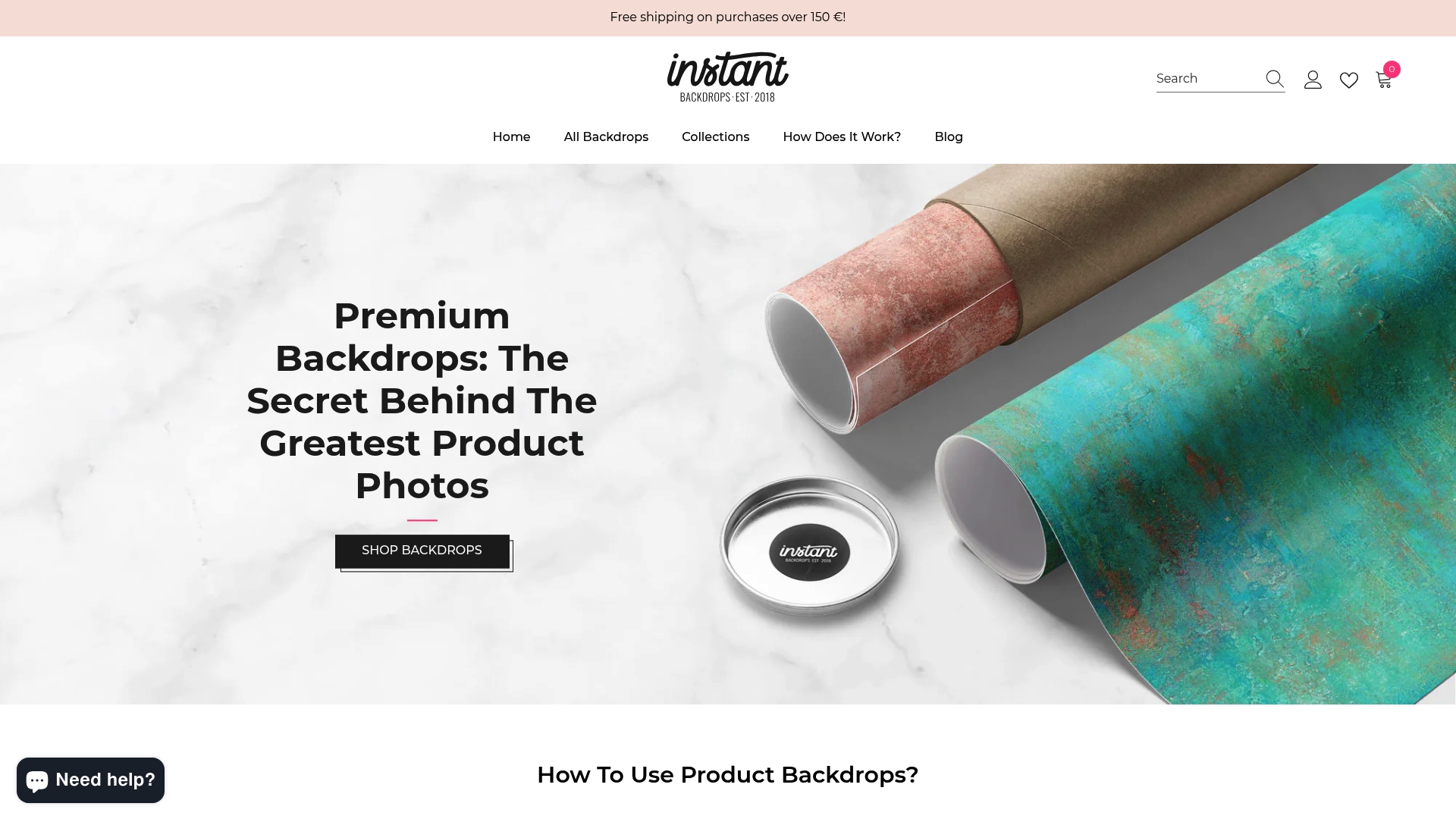
Explore curated collections like the industrial vinyl photography backdrops bundle for modern, urban aesthetics or the rustic patina vinyl backdrops for warm, textured backgrounds that add character to lifestyle and product photography. These bundles provide versatile options that align with the selection criteria outlined in this guide, helping you build a professional backdrop library without trial-and-error purchasing.
How to choose the right backdrop - frequently asked questions
What’s the best backdrop material for product photography?
Vinyl backdrops are ideal for product photography due to their durability, spill resistance, and ability to maintain color accuracy under studio lighting. They wipe clean easily and last multiple years with proper care, making them cost-effective for high-volume e-commerce shooting.
How do I measure backdrop size correctly?
Measure your subject height and width, then add at least 12 inches on all sides to account for composition flexibility and mounting hardware. Remember that usable backdrop height is typically 6-8 inches less than advertised due to floor pooling and mounting clips.
Can I use a green backdrop for portraits?
Green backdrops are not recommended for portraits unless you plan to replace the background digitally in post-production. Green reflects onto skin tones and creates unflattering color casts that complicate color correction, making neutral tones a better choice for traditional portraiture.
How often should I replace paper backdrops?
Paper backdrops typically last only one to three uses before showing visible wear, tears, or stains. Replace them immediately when damage appears, as imperfections become highly visible in final images and undermine professional presentation.
What maintenance does a vinyl backdrop require?
Vinyl backdrops require regular cleaning with mild soap and water or specialized vinyl cleaners that include UV protection. Avoid abrasive scrubbing and store backdrops rolled around a core tube away from direct sunlight to prevent fading and material degradation.
Recommended
- Backdrop materials for professional photography: 2026 guide – Instant Backdrops
- 7 Essential Photography Backdrop Tips for Stunning Shoots – Instant Backdrops
- Why backdrop size matters for professional photography – Instant Backdrops
- 7 Essential Photography Backdrop Ideas for Pros – Instant Backdrops